Five Things You Didnt Know About
As part of Analysis in Authorities month, this is the final edition in our series of 'Five things you didn't know about…' web log posts. Assay in government is being used more than than always in policy, decision making and the media, this series of blog posts will share, showcase and celebrate the vast variety of professions and work within the Analysis Function.
Jump to one of our posts:
- 5 things you didn't know most user engagement
- Five things you didn't know about cognitive interviewing
- 5 things you didn't know nigh information scientific discipline
- V things y'all didn't know near the work of the Economic and Social Enquiry Quango (ESRC)
- Five things yous didn't know about behavioural science
V things yous didn't know nigh user engagement

By Tegwen Green (left) and Nancy Singh (right), Office for National Statistics
For the last 15 months Nancy and I have been working with users and producers of statistics to develop a user engagement strategy for statistics.
The strategy sets out a plan of action for building a more than meaningful and sustained dialogue betwixt producers, users and potential users of statistics. Its principles are widely relevant to anyone conducting assay across dissimilar professions.
Nosotros desire to spread the word about the value of user date, in the midst of a pandemic, more always. We've highlighted five of import things nosotros want you to call back about user engagement. Y'all might know some of them already – if so, then perhaps share them with your colleagues as well!
i. You lot're doing a lot of user engagement already
We merely want to remind you all that every time you ask an stance or take an informal chat well-nigh your work, you are engaging with a user or potential user of your analysis.
Let'south go better at recognising and acknowledging the skillful behaviours and deportment that we already display. Permit'due south build on those to create even more opportunities to develop regular, ongoing, two-way dialogue with a wider range of people.
Engagement is rewarding and information technology can exist anything from an email exchange to a full-blown consultation exercise. If y'all have an engagement success story to share e-mail goodpracticeteam@statistics.gov.uk and so nosotros tin assist showcase your experience and inspire others to follow your lead.
two. One size doesn't fit all
This may seem obvious, but nosotros actually practise need to tailor our date activities to conform the intended audience, much as we would do with whatever other sort of communication. We accept such a huge range of users and potential users of our products and services, and nosotros probably don't even know who they all are.
This is where techniques such as audience sectionalisation and the use of user personas tin can assistance us categorise and gain insight into what users of our statistics desire and need from us. Through this understanding nosotros can tailor our communications and our statistics to ensure that as many users as possible are aware of our statistics and engage with them and us.
3. No one does information technology perfectly
User engagement tends to be most effective when information technology has multiple strands and when your appointment happens as office of your organisation'south wider engagement activities.
We don't need a few people doing user appointment perfectly, nosotros simply need lots of people trying their best to do information technology well and working together to get in happen as function of business as usual.
Allow'south learn from each other'due south' experiences and share all the 'adept stuff'. Why not take a look at these success stories and tell usa most the successes yous've had engaging with users, so we can showcase those, to inspire and help others.
4. Help is at mitt
You lot're non alone – every bit ever, your colleagues across government are here to support you lot in your endeavours. For example, you tin can:
- link up with the cross-regime user engagement champions – a vibrant and enthusiastic network of user engagement enthusiasts
- place your appointment challenges for the new User Support and Appointment Resource (USER) hub to help address, or ask for applied advice from the Good Practice Team
- mail service a query on the regime-wide User Appointment Slack channel
- reach out to your organisation's stakeholder engagement or communications teams to identify new contacts and explore new channels of engagement
5. Nosotros have a vision for the future of user engagement
Nancy and I launched the new four-year user date strategy for statistics on 22 Feb 2021. The strategy has:
- a radical vision - for user engagement to be 2nd nature and congenital into our organisations' wider activities
- three ambitious goals, the '3Cs' – centred around facilitating collaboration, building capability and encouraging a civilization modify
Five things yous didn't know about cognitive interviewing

Past 1000000 Pryor, Office for National Statistics
Cognitive interviewing is a method which is used to come across how individuals process and respond to survey questions, assuasive us to investigate what the respondent is thinking about when they're answering our surveys. I accept been doing cognitive interviewing for three years, so this blog is based around the things I have learned while doing and then, which I didn't know before! Every bit a annotation, the cerebral interviewing I'm going to discuss here is not the same as cognitive interviewing that happens in police force settings.
1. This is usual practice within question and questionnaire design
Earlier starting at the Function for National Statistics (ONS) I didn't know that cerebral interviewing was a process within questionnaire and survey design - in fact I had not heard of it at all from my time in academia! Since joining, I now know that it is an integral part of edifice and designing a survey and allows united states equally researchers to see whether or not a question is clear for a respondent. It allows us to identify if in that location are whatsoever risks to the data quality because respondents may interpret the question to mean something dissimilar than what the question designer intended. This could come up in a diversity of forms:
- Respondents may answer the question incorrectly because they practise not understand a term.
- Respondents may exist misremembering an event or the frequency of events.
- Respondents may exist deciding to approximate rather than summate answers.
- Respondents may say something they experience is untrue because information technology makes them 'look improve', especially in interviewer-led modes.
- Respondents may get frustrated and cease completing the survey entirely (if it is voluntary).
Conducting cognitive interviews allows us to better understand the data we're collecting and helps to identify these risks early. It therefore allows united states of america to call back nigh what we tin practise to mitigate these risks and make the answering procedure easier for respondents. This could be redesigning the question if possible or incorporating guidance.
2. Information technology tin can exist done remotely
Nosotros're a year on from the showtime of the coronavirus (COVID-xix) pandemic, and it has meant we have had to alter the ways in which we piece of work. This has included enquiry. While previously I had conducted cerebral interviews face-to-face up, this was no longer possible. Just that does not mean that cognitive interviewing can't go ahead, it but has to become ahead a little differently.
I recently co-authored a weblog post on the GSS website talking near remote testing in exercise, and how we experienced it. For cognitive interviewing specifically, key points would be to have sessions concluding no more than than 60 minutes as opposed to 60-xc minutes as remotely it'due south harder to keep your participants concentration. Also, to advisedly think well-nigh what software and technology not simply y'all have admission to, simply also what the participant has access to. Lastly, every bit with confront-to-face up, think about the ethics! Employ the Government Social Research (GSR) Professional Guidance to help with this.
All in all, don't exist put off cognitive interviewing because of the pandemic. Doing information technology remotely has many benefits! There is too guidance on the GSS website to help you get started.
3. It can be emotive
Equally I alluded to, ethics are very of import to consider, and especially so when cognitive interviewing. I accept had interviews where the person I'm speaking to has started to cry and has gotten upset and therefore I stopped the session and provided aftercare. It's of import to call up that survey questions even so have the potential to exist emotive if they are sensitive, even if at outset they don't appear and so.
Cognitive interviewing tin show the sensitivities of questions which we may not take been aware. For example if you're asking a question on household spending, the respondent may have only lost their job and then e'er be mindful. With this in mind, the U.k. Statistics Authority has a great Ethics Self-Assessment Tool which you can use to place ethical risks earlier the research sessions.
Still, to quote the Government Digital Service's principle 'you are non your user' so therefore you might not realise the emotional bear on a question might have until y'all're in the research session. Therefore, I also recommend putting together a plan in place for if a participant becomes distressed in the session.
4. Get the participant to 'recall aloud'
How tin we expect to find out the cerebral processes a participant is going through without a auto hooked up to their brains? Getting them to get through the process of thinking aloud.
This can exist a weird concept for participants to understand. Nosotros essentially want them to tell the states what they're thinking when they're presented with the question, and the processes they become through to effigy out their answer. That is easier said than washed, and is something that sometimes doesn't come easy to participants.
Ane style to help them empathise 'thinking aloud' is to requite them an instance of what you lot mean. An instance I often use is:
'If you asked me how many windows were in the room I'm sitting in, I could say two and that would be my answer. But if I were to think aloud, I would say I have a window next to my Television receiver, and so a bay window side by side to me. I don't know if a bay window counts as multiple windows, considering it has multiple sections, but to me information technology's just one window, therefore I have ii windows.'
After providing that example, I then ask the participant to try giving it a go themselves, so they have a improve thought, and I can explain it further if they want further information.
It's often through this method that you get gilded quotes that actually show you what'southward going through their minds when answering your questions.
5. Silence is your friend!
Now while we want the participants to be equally loud every bit possible, information technology is incredibly of import for united states of america equally researchers to utilize silence, as it is your all-time friend while cognitive interviewing. As the maxim goes, less is more than! It allows the participants to keep talking and to continue providing you lot with rich, quality data into why they have answered the question in that way.
Withal, something which I accept learnt through conducting remote testing especially is that while you want to give the participant room to talk, if you're tranquillity for too long they may recollect your internet connectedness has gone! And then instead, every now and then make a 'hmm' noise so that they know the applied science isn't playing up.
In conclusion, I hope this has shown you some aspects to cognitive interviewing that you may not accept known previously. If you lot're starting work on a survey, or wanting to design questions, I cannot recommend plenty conducting these sessions for yourselves and you tin can find courses available on the GSS website.
Five things you didn't know about data science

By Hillary Juma, Jonathon Mellor, Lewis Edwards, Ali Cass from Data Scientific discipline Campus, Office for National Statistics and Emma Walker from Center for Applied Data Ethics, UK Statistics Authorisation (UKSA)
Data Science is informing policy, digital products, and operational decisions beyond the Public Sector. Data Science is the practice of bringing together mathematical cognition, domain knowledge (such as environmental policy) and computer science to provide analytical or operational insight. Encounter The Data Science Venn Diagram.
In this blog we dispel myths around data science.
1. Demystifying data scientific discipline
Data Scientists produce algorithms; a set of rules for solving a problem in a finite number of steps. Data Scientists work closely, with data engineers, information architects and product managers, to deliver business relevant insights. An example information scientific discipline projection is the apply of machine learning to predict energy efficiency from free energy functioning certificates data.
Information Science has similarities and differences to Bogus Intelligence (AI), for example the similarities include the use of algorithms and machine learning. Automobile learning is the procedure of using of algorithms that generate predictive or explanatory models based on patterns or structures in data. The difference is that AI is the theory and development of reckoner systems able to perform tasks normally requiring human intelligence. For example, Siri or Alexa performing task in response to a vocal request.
2. Learning Information Science
Thankfully, a degree in data scientific discipline is not a requirement to be a data scientist, nor should it exist! Thank you to the open-source community spirit and training on offer from the ceremonious service, the routes into and for advancing in the field are immense.
There is no one right manner to learn information science: try out a new technique at work, a training course here, a personal project there, a blog read with a cup of tea or a podcast while you go for a walk. All are valuable to expand your knowledge of programming, statistics, and AI. You tin find an abundance of open access books, tutorials, and welcoming communities online and in person (for example the Government Data Science Slack channel). Within authorities there are fifty-fifty more communities and meetups, along with training cloth bachelor created for those working in government (such as the Analysis Function curriculum) and mentoring opportunities such equally the Information Scientific discipline Accelerator.
To misquote a famous phrase: "The journey of a yard information science techniques begins with a single article," starting is the hardest part.
3. Data Ideals is more than just assessing for "Bias in, Bias Out"
When it comes to using data science in our work, the possibilities and potential applications can seem countless! However, it is vital that nosotros advisedly consider not but what nosotros tin do with these techniques, just also what we should do.
Data ethics is a growing field and there is an increasing amount of information and resources related to ethical considerations in motorcar learning and AI. These include aspects related to transparency in techniques, approaches, and datasets, considerations of consent and privacy in relation to the utilise of information, accountability, and man oversight, and understanding the limitations of methods used, including the potential for biases in datasets and approaches that may lead to groups being underrepresented or discriminated against in some style.
In sum, thinking about ideals in data scientific discipline is crucial and this is reflected in the recent launch of the United kingdom Statistics Potency's Heart for Applied Information Ethics, which aims to further help researchers and statisticians address ethical considerations in their work.
4. It is more than code
- Art of information scientific discipline is exploring the trouble and so conveying insights
- Coding is the part of the journey, only the destination is agreement
- Know your audience
Whilst the day-to-day piece of work of a data scientist may seem similar a scene from the Matrix with lines of lawmaking beyond multiple screens, this is merely role of the journey.
The about valuable contributions that information scientists tin make to a team, business or department are sharing the deep insights from behind the information's silicon curtain. Developing this value volition involve the application of diverse techniques and skills, such every bit the machine learning approaches mentioned already.
Just the time to polish is when you nowadays and talk through what you have plant out most the data; whether confirming untested assumptions that have been held truthful about the data past regular users (a very common feel) or revealing unexpected characteristics nigh how certain variables relate to others.
Often summarised in the form of dazzling visualisations or interactive dashboards, the opportunity to present these to the rest of your customs and explore the true value of whatsoever data source together is a rewarding experience. Information technology besides a chance to inspire curiosity in the data from as-withal unconvinced colleagues (friends and family unit too, if you are willing to chance information technology) and other unexplored options.
Whether it is a personal project or part of a large programme of work, the function of a data scientist lies in agreement the job at mitt, digging into the data with your favourite information inspection tools and and then setting out a cord of achievable goals towards what might (with an allowance for pragmatism) become a fully-fledged belittling pipeline replete with cutting-border techniques.
5. At that place are no unicorns
Since information scientific discipline is a combination of several skillsets applied in a multitude of ways, the path to becoming a data scientist can be a very individual journey.
Different a more traditional career path where i might become an proficient in their field by post-obit a structured route, there are no unicorns in information scientific discipline – no experts in all elements!
Instead, you lot will find accomplished data scientists with expertise skewing towards a range of areas in the Venn diagram higher up. This might be more on the software engineering side of things with responsibilities including building information scientific discipline architectures and workflows, or the domain expertise side applying innovative applied science to solve issues related to climatic change and the environment.
If you were to ask a data science team how they each got to where they are you volition hear all sorts of journeys. And that is bully! It speaks to the diversity of the information science skillset and applications and having a squad that capitalises on this is a great position to exist in when tackling novel problems.
Conclusion
Over the years, there has been a growing understanding of the value of data and the sorts of way it tin can be realised. Whilst the proportion of senior leaders that needed encouragement to prioritise exploration of their information in innovative ways has decreased, the growth in appetite to brand utilize of more data and explore more circuitous techniques has been exponential.
If you would like to learn more than about Data Science in the Public sector, feel free to check out the following resources:
Open to all:
- Information in Regime Blog
- Information Science Community of Interest, Machine Learning Blog Post
- Data Scientific discipline Campus, Learning and Evolution
- Data Science Campus mailing listing
- Data Science project: Estimating Vehicle and pedestrian activity from town and city traffic Cameras Dr Li and Dr Ian, Senior Information Scientists, Data Science Campus, ONS Presented at Plant for Governments, Data Bites
Open to UK Public Sector Employees just, access with piece of work address:
- Government Data Science Slack – customs forum
- Government Data Scientific discipline Festival Knowledge Hub Cyberspace – community presentation'due south library
- Government Information Science Partnership Mailing List
- Information Scientific discipline Community, Service Manual page
- Data Science Seminar Series - hosted by the Data Scientific discipline Campus, ONS
Five things you didn't know about the work of the Economic and Social Research Council (ESRC)

By Alison Park Interim Executive Chair of ESRC
In this blog mail, Interim Executive Chair of the Economical and Social Research Quango (ESRC) Alison Park, describes 5 things you didn't know about the work of ESRC.
ESRC was established over 50-five years agone to help inform policy and industry. We are at present one of the 9 councils that make up UK Inquiry and Innovation (UKRI) where nosotros work to achieve UKRI's mission to 'connect discovery to prosperity and public skillful.' Here are five things yous might not know well-nigh ESRC.
1. The breadth of our enquiry and information investments
Work we fund improves our understanding of how we call back, feel and conduct, of our mental health, education, piece of work and family lives. Our researchers consider how organisations are managed, how states are governed, and how to attain a fair and sustainable economy. This show informs conclusion making and efficient public service delivery.
Examples include:
- The Productivity Institute — a new investment which will provide a deep understanding of what individuals, firms, regions and national policy can practice to improve productivity.
- ADR UK — a partnership of government and academic groups working with Whitehall departments and devolved administrations to create linked research datasets from administrative sources covering areas from didactics and health to crime and justice. Read more nigh ADR UK's impact.
- An array of national studies including Agreement Order, the earth'south largest longitudinal household console study, which provides vital evidence about change and stability over time beyond nearly every chemical element of people'south lives.
- Policy facing research on people's behaviour and climate modify through The Centre for Climate and Social Transformation (Bandage) and Place-based Climate Activeness Network (PCAN).
2. The relevance of our work to regime priorities
Many of you volition be enlightened of the Areas of Research Interest (ARIs). Less well known is that nearly two-thirds of all ARIs can be addressed primarily with insights from the social and behavioural sciences, as the Government's Chief Scientific Adviser Sir Patrick Vallance has pointed out.
More specifically, merely as government priorities are now very focused on issues such as the pathway to cyberspace null, levelling upward and skills, then too are our plans.
Every bit well equally further research on climate change adaption and mitigation, we are planning place-based inquiry investments that will provide a better agreement of the different challenges facing different regions and cities, as well as scoping work to build a high-quality evidence base of operations on skills to amend policy and practice across all economical sectors.
We are looking frontwards to continuing to engage with regime in refining our thinking in these and other areas.
3. Our commitment to connecting inquiry and policy
Our aim is to better connect enquiry capability with policy challenges. Nosotros've recently been focusing on how nosotros can catalyse deeper and enduring connectivity beyond the research-policy organization. Our vision is to realise the potential of research to inform and shape public policy at all levels.
We are currently exploring a range of activities, including:
- Developing our Testify Centre Network, including the Chiffonier Office-led What Works Network and our Economic science Observatory and International Public Policy Observatory investments
- Building on our PhD Review to upskill researchers to enable them to work more collaboratively with non-academic users
- Identifying policy relevant data linkages and ensuring our information infrastructure aligns with policy needs.
To flesh out these activities we will be talking to government stakeholders and departments to understand their interests.
four. Our new people exchange and fellowship framework
An immediate priority is to develop a people exchange and fellowship framework which creates opportunities for researchers to spend time in the center of policy organisations and for those in government to gain experience in inquiry organisations.
Over the next yr we'll test and develop this framework, also as pilot information scientific discipline fellowships with No.10, initially focusing on levelling upwardly, net nil and coronavirus (COVID-19) recovery.
5. The scale of our COVID-19 research
ESRC has but under 200 grants in our COVID-xix portfolio, which are generating unparalleled insights into the impacts of the pandemic and will back up the ongoing national response and recovery efforts. We engaged with CSAs and devolved administrations to match proposals with policy priorities and are now extending this appointment with other policy stakeholders.
Do go on an eye out for a serial of 'actionable insights seminars' that we are developing in partnership with government analytical networks. These will focus on thematic areas of relevance to central authorities priority areas. I hope this weblog has given you a brief impression of some of ESRC's priorities and a sense of how we encourage close connections between research we fund and policy priorities. To continue up to date with our work please follow us on Twitter and visit our website.
Five things you didn't know almost behavioural science in the Department for Work and Pensions
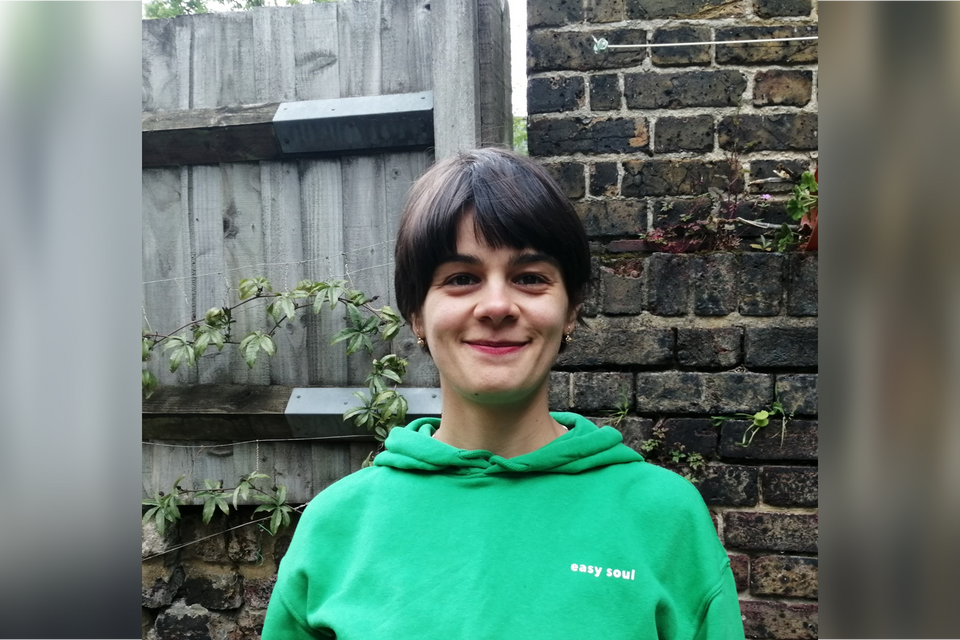
By Alexandra Urdea, Department for Work and Pensions (DWP)
I am a social researcher and member of DWP's Behavioural Science team. I take a PhD in anthropology and currently work on a cross-departmental project to help more informal carers remain in work.
Like a number of other government departments, DWP has its own behavioural science function tailored specifically to the needs of the department in which it sits. As a team nosotros piece of work across a broad range of policy areas, from inability benefits to labour market interventions, aslope more than internal-facing challenges like organisational transformation and people performance policies.
It would be presumptuous for us to speak for other teams in this emerging field, which continues to change as needs and approaches evolve. Only for now, and for DWP, here are 5 things you probably didn't know virtually behavioural science.
1. Our practices are distinct from Behavioural Insights
Behavioural science is oft seen as synonymous with Behavioural Insights (BI). BI involves finding low cost ways of nudging people's behaviours – usually through communications – with the effectiveness of nudges measured using randomised control trials (RCTs). Simply behavioural scientific discipline is an umbrella term that covers a range of dissimilar approaches to solving problems involving man behaviour. DWP Behavioural Science was designed in 2015 to complement, rather than duplicate, an analytical function with all-encompassing expertise in trialling interventions. Our squad takes a more than upstream focus, supporting colleagues to design user-centred, behaviourally informed policies and services from the outset.
2. We aid colleagues to empathize and diagnose problems
Many of the problems we work on in DWP – similar tackling long-term unemployment and designing an effective benefits organisation – are highly complex. They involve a range of different 'actors', including policy colleagues, piece of work coaches in Job Centres, GPs and employers as well as benefit claimants. Often the Section is asking these actors to perform complicated series of behaviours in order to achieve a policy goal. We work with colleagues to translate their goals into concrete behaviours and so that nosotros can explore how realistic they are, and then systematically map the barriers currently preventing people from doing them (COM-B is 1 of our favourite tools for this). It's but once we've washed this that we start co-designing solutions to address those barriers.
3. Nosotros're interested in systems and context
All homo behaviour happens in the context of social structures and systems. These include more nebulous things like cultural norms – for example around who should care for elderly relatives in a family – as well equally more tangible things like legal employment rights. These structures and systems enable certain actions and choices whilst constraining or preventing others. Understanding the context in which behaviours are taking place is vital if we desire to sympathize why people do the things they practise, and what might help them behave differently. It also helps us think through the hazard that proposed interventions in one part of a system will have unintended consequences in another part.
4. Nosotros're non all psychologists!
Psychologists, such every bit Daniel Kahneman and Amos Tversky, are the social scientists most often associated with the emerging field of behavioural science. Their ideas and findings confirmed the suspicions of economist Richard Thaler that people often don't act in the way traditional economic theory would suggest. This is why, Thaler thinks, different social sciences that can help sympathize human behaviour should take a stronger vocalisation in policymaking. Nosotros accept very much taken this bulletin to heart. In our team we have psychologists, but likewise anthropologists, sociologists, philosophers, operational researchers and policy professionals (to proper noun simply a few)! This trans-disciplinary approach means nosotros can generate a far richer and multi-faceted understanding of human being behaviour – and therefore more innovative and effective solutions – than whatsoever single subject area could reach.
5. We are methodological magpies
Some behavioural science teams specialise in quantitative insights and touch on evaluation. Others tin can draw on well-established literatures about the drivers of detail behaviours. Given the nature of what nosotros do in DWP we find qualitative methods particularly helpful for unpacking the context within which behaviour occurs, and for developing and testing behavioural hypotheses. We oftentimes draw on ethnographic, co-productive and other creative methods. Nosotros also utilise tools from the digital and user centred blueprint (UCD) professions to aid usa think almost user needs and solution design. Our toolkit is constantly growing and evolving to help us improve tackle the problems we're faced with and nosotros don't see this changing any time soon!
Source: https://www.gov.uk/government/news/part-five-five-things-you-didnt-know-about
0 Response to "Five Things You Didnt Know About"
Post a Comment